We always take care of your smile
Prosthetic dental treatment, or dental prosthesis application, is performed to correct disorders in the shape, structure, color, and position of teeth, addressing conditions that cause aesthetic problems. Advanced decay that weakens the tooth or trauma resulting in tooth substance loss may not be treatable with a filling. Developmental failure of tooth eruption or tooth extraction for medical reasons creates edentulous spaces in the mouth. These gaps can lead to aesthetic issues as well as:
Difficulty in eating
Speech problems (inability to pronounce certain letters correctly)
Psychological issues (shyness, loss of self-confidence, avoiding smiling)
Further deterioration of oral health (teeth shifting, wear, decay, etc.)
Jaw joint pain, sounds, and movement disorders (Temporomandibular joint disorders)
It can also cause general health issues, such as digestive problems and nutritional deficiencies, due to insufficient chewing function.
Prosthetic dental treatment is a branch of dentistry that addresses a person’s aesthetic and functional needs, combining both health and artistry.
Dental prostheses can be broadly classified into fixed prostheses, removable prostheses, and implant-supported prostheses.
Removable Prostheses
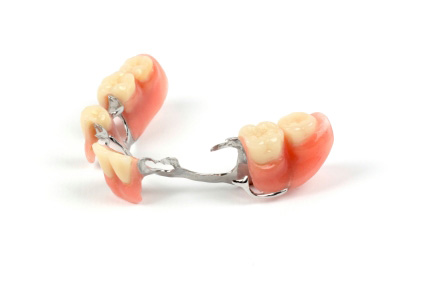
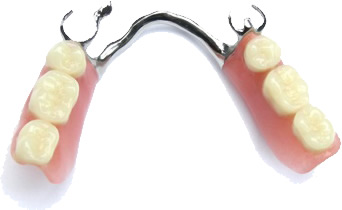
Removable prostheses are applied in cases where the abutment teeth cannot bear the upcoming load, in situations with extensive tooth loss, or in areas where the missing teeth do not end with a natural tooth. If there are remaining teeth to serve as support, the prosthesis is called a partial denture; if no teeth remain and it rests on the tissue surface, it is called a complete denture.
Partial dentures are prosthetic applications supported by both teeth and tissue. For tooth support, clasps—small extensions called clasp arms—engage the convex area of the tooth near the gum line to provide retention. Tissue support comes from the surface on which the prosthesis rests, thereby distributing the chewing forces across both teeth and tissue.
Fixed Prostheses
Fixed prostheses are types of dental restorations created by fabricating structures on models obtained from impressions after tooth preparation and then cementing them permanently onto the prepared teeth in the mouth.
Advantages of Fixed Prostheses:
They are discreet since the patient cannot remove them.
Generally more natural-looking and aesthetic compared to removable prostheses.
Provide better chewing efficiency than removable prostheses.
Do not extend onto the palate or under the tongue.
Disadvantages of Fixed Prostheses:
Bone loss can occur in areas where natural teeth are missing.
Healthy neighboring teeth may need to be prepared to support bridges.
Potential for gum problems increases.
Long-term aesthetic issues, such as gum recession, may develop.
Areas around the bridge where bacteria can accumulate make oral hygiene more difficult.
Can contribute to bad breath.
Decay may develop on teeth or roots under the bridge.
Overdenture (Tooth-Supported) Prostheses
When teeth are severely misaligned, crowded, or elongated and would cause incompatibility with the planned prosthesis, instead of extracting them, their lengths can be reduced and telescopic crowns (nested crowns) or precision attachments can be applied.
In such cases, the remaining teeth act as support within the prosthesis, over which a removable prosthetic structure is placed. These types of restorations are called overdenture prostheses. Keeping the tooth roots in the mouth helps prevent bone loss and preserves intraoral sensory perception.
Complete (Full) Dentures
When there are no remaining teeth in the mouth to provide support, force transmission, and retention are achieved through the prosthesis resting on the tissue surfaces. Prosthetic applications that are entirely tissue-supported are called complete (total) dentures.
We always take care of your smile
+90533 302 77 78
Dentamar Oral and Dental Health Polyclinic Services © 2025 | All Rights Reserved. Crow Digital Agency