

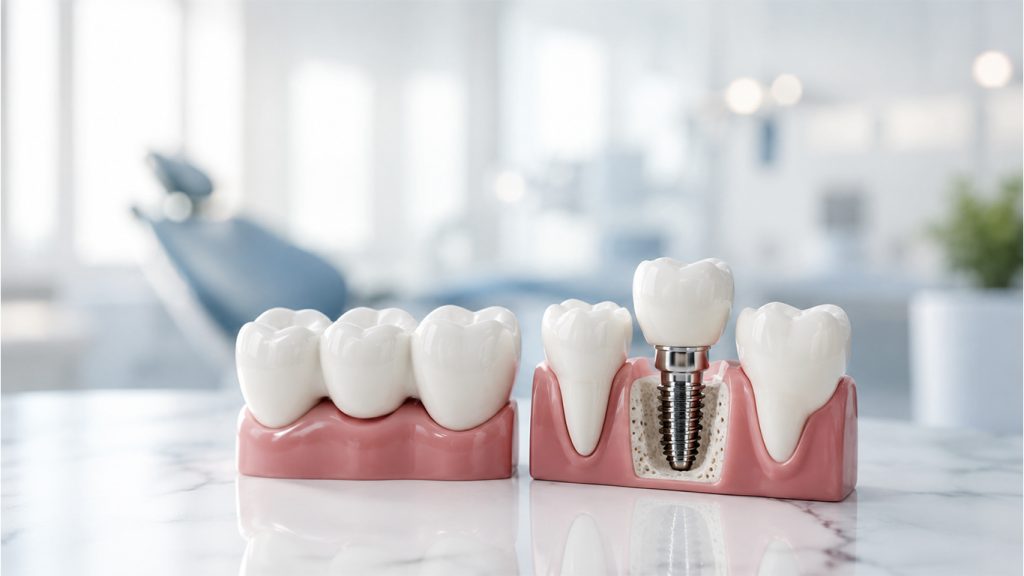
Understanding Your Tooth Replacement Options
Missing teeth can affect much more than your appearance. They may impact chewing, speech, jawbone health, and overall confidence. Fortunately, modern dentistry offers effective solutions to restore both function and aesthetics, most commonly through dental implants and dental bridges.
But which option is better for you?
What Are Dental Implants?
Dental implants are titanium posts surgically placed into the jawbone to replace missing tooth roots. Once healed, a custom-made crown is attached to the implant, creating a natural-looking and durable replacement tooth.
Benefits of Dental Implants
- Long-lasting and highly durable
- Help preserve jawbone density
- Do not rely on neighboring teeth
- Natural appearance and feel
- Stable and comfortable while eating or speaking
What Are Dental Bridges?
A dental bridge is a restoration that fills the gap left by a missing tooth using support from adjacent teeth. The neighboring teeth are reshaped to hold the bridge securely in place.
Benefits of Dental Bridges
- Faster treatment process
- No surgical procedure required
- More affordable upfront
- Effective solution for some patients
Key Differences Between Implants and Bridges
Longevity
Dental implants are designed to last for many years with proper care, while bridges may require replacement over time.
Bone Preservation
Implants stimulate the jawbone similarly to natural tooth roots, helping prevent bone loss. Bridges do not provide this benefit.
Impact on Adjacent Teeth
Bridges require support from neighboring teeth, meaning healthy teeth may need to be altered. Implants stand independently.
Treatment Process
Implants involve surgery and a healing period, while bridges are generally completed more quickly.
Which Option Is Better for You?
The best treatment depends on:
- Your oral and bone health
- The location of the missing tooth
- Your long-term expectations
- Budget and lifestyle factors
Dental implants are often preferred for their durability and long-term oral health benefits. However, bridges may still be an excellent option in certain situations.
Both dental implants and bridges can successfully restore your smile when planned correctly. The key is choosing the option that best supports your oral health, comfort, and long-term goals.
