

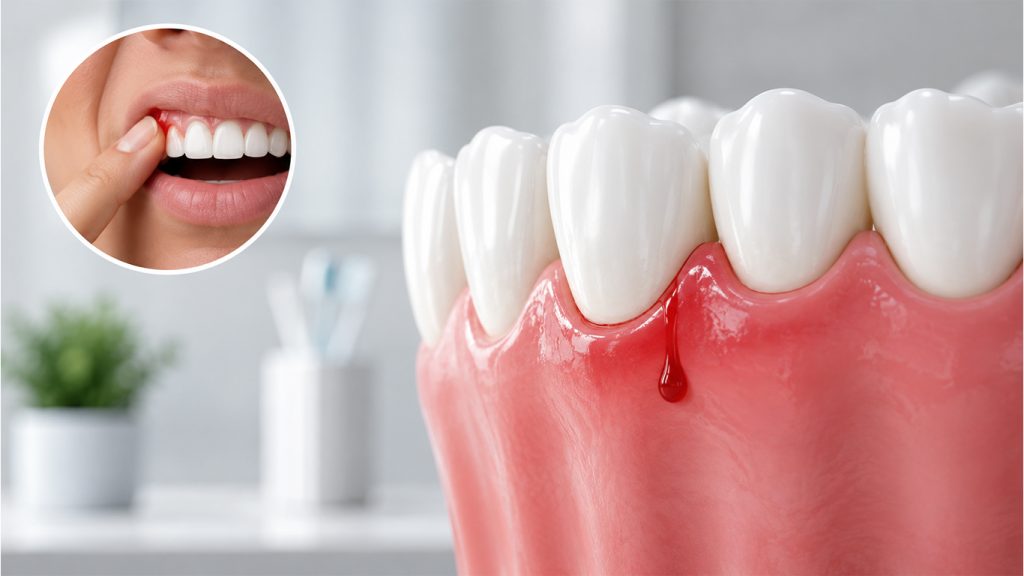
Is Bleeding Gums Normal?
Bleeding gums are often ignored, especially if they happen occasionally while brushing or flossing. However, healthy gums should not bleed regularly. In many cases, bleeding gums can be an early sign of underlying oral health problems.
Understanding the cause early can help prevent more serious dental issues.
Common Causes of Bleeding Gums
Plaque and Gum Disease
The most common cause is plaque buildup along the gum line. When plaque is not removed properly, it can irritate the gums and lead to gingivitis — the early stage of gum disease.
Poor Oral Hygiene
Irregular brushing and flossing allow bacteria to accumulate, increasing inflammation and sensitivity in the gums.
Brushing Too Hard
Using excessive force or a hard-bristled toothbrush may damage gum tissue and cause bleeding.
Smoking and Tobacco Use
Smoking weakens gum tissue and increases the risk of gum disease, infection, and delayed healing.
Hormonal Changes
Pregnancy or hormonal fluctuations can make gums more sensitive and prone to bleeding.
When Should You See a Dentist?
Occasional sensitivity may not be serious, but persistent bleeding should never be ignored.
Signs You Should Seek Professional Care
- Bleeding that continues for several days
- Swollen or red gums
- Bad breath that does not improve
- Gum recession
- Pain or sensitivity while chewing
Early treatment can prevent gum disease from progressing into more advanced stages.
How to Protect Your Gum Health
Maintain Good Oral Hygiene
- Brush twice daily with a soft-bristled toothbrush
- Floss regularly
- Use dentist-recommended mouthwash
Visit Your Dentist Regularly
Professional cleanings help remove plaque and tartar that cannot be cleaned at home.
Avoid Smoking
Reducing tobacco use can significantly improve gum health and healing.
Bleeding gums are often your body’s way of signaling that something needs attention. Early care and regular dental visits can protect your gums, teeth, and long-term oral health.
