

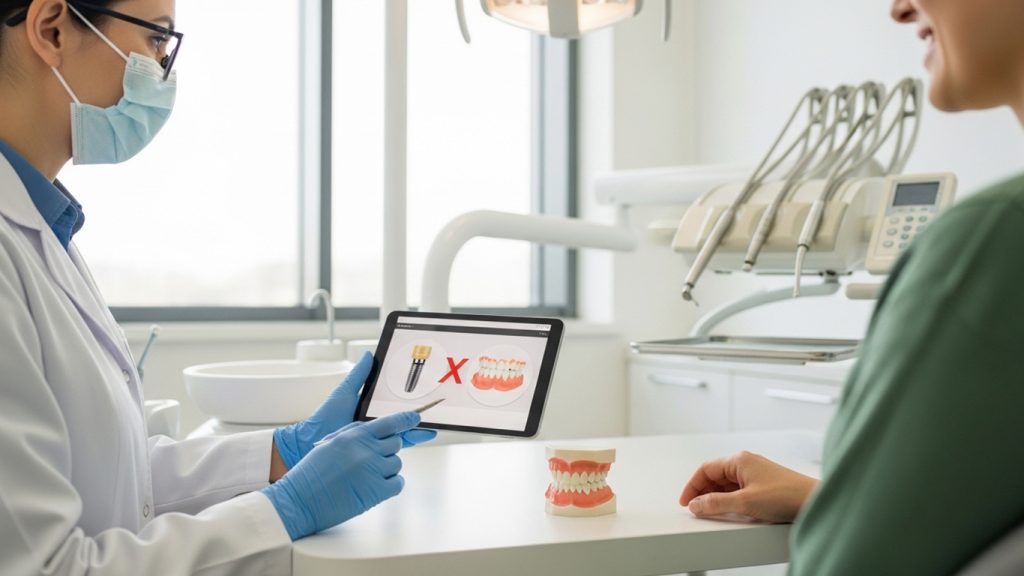
Understanding Your Tooth Replacement Options
Missing teeth can impact more than just your appearance. They can affect your ability to chew, speak clearly, and maintain proper oral health. Fortunately, modern dentistry offers two reliable solutions: dental implants and dental bridges.
But how do you know which one is right for you?
What Are Dental Implants?
Dental implants are artificial tooth roots made of titanium that are surgically placed into the jawbone. Once the implant integrates with the bone, a custom-made crown is attached, creating a strong and natural-looking tooth replacement.
Benefits of Dental Implants
- Long-lasting and highly durable
- Help preserve jawbone structure
- Do not affect neighboring teeth
- Provide a natural look and feel
What Are Dental Bridges?
A dental bridge is used to replace one or more missing teeth by anchoring an artificial tooth to the adjacent natural teeth. These supporting teeth are reshaped to hold the bridge in place.
Benefits of Dental Bridges
- Faster treatment compared to implants
- More affordable upfront
- No surgical procedure required
Key Differences Between Implants and Bridges
While both treatments aim to restore your smile, they differ in approach and long-term outcomes.
Longevity and Durability
Dental implants are designed to last many years, often decades, with proper care. Bridges, while effective, may need replacement over time.
Impact on Natural Teeth
Implants stand independently and do not affect surrounding teeth. Bridges require support from adjacent teeth, which means those teeth need to be prepared.
Bone Health
Implants help maintain jawbone density by stimulating the bone, similar to natural tooth roots. Bridges do not provide this benefit.
Procedure and Healing Time
Implants involve a surgical procedure and a healing period, while bridges can usually be completed more quickly without surgery.
Which Option Is Right for You?
The best treatment depends on your individual situation. Factors your dentist will consider include:
- Your jawbone density and structure
- Overall oral health
- The number and location of missing teeth
- Your expectations and long-term goals
- Budget considerations
In many cases, dental implants are preferred for their durability and long-term benefits. However, bridges can be a great solution for patients looking for a quicker and less invasive option.
Why a Personalized Consultation Matters
Every smile is unique. That’s why the most important step is a detailed consultation with your dentist. A proper evaluation ensures that your treatment is not only effective but also tailored to your needs.
Both dental implants and bridges can successfully restore your smile when planned correctly. The right choice comes down to your personal needs, lifestyle, and long-term expectations.
